
Updated Prices 2026

Colosseum Admission Costs:
Fees, Concessions and How to Save

Complete and updated guide to all fees for visiting the Colosseum in 2026. Adults, concessions, free admission, Roma Pass, student discounts and EU citizens. Data sourced directly from ticketing.colosseo.it.

Independent information portal. Not affiliated with the Colosseum Archaeological Park. Links to guided experiences are affiliate links. Prices are subject to change: verify at ticketing.colosseo.it.

Colosseum Fees 2026: At-a-Glance Summary

Overview of all official fees in force in 2026, sourced from ticketing.colosseo.it. The combined pass includes the Colosseum, the Roman Forum and the Palatine Hill.

Summary of official fees for visiting the Colosseum, Roman Forum and Palatine Hill in 2026
Category Fee What is included Notes
Adults (standard rate) €18 Colosseum + Roman Forum + Palatine Hill Valid for 2 days from first use
Reduced rate (18–25 years, EU citizens) €2 Colosseum + Roman Forum + Palatine Hill EU identity document required on entry
Under 18, EU citizens Free Colosseum + Roman Forum + Palatine Hill Identity document required
First Sunday of the month Free Colosseum + Roman Forum + Palatine Hill For everyone; queues very long
Visitors with severe disability Free Colosseum + Roman Forum + Palatine Hill Free also for one accompanying carer
Licensed tourist guides Free Access with groups With official tourist guide licence
Guided experiences (groups) from €20 additional Expert guide + standard levels On top of the base site admission
Underground or arena floor tours from €40 additional Guide + exclusive areas Limited availability; advance planning required

Indicative data sourced from ticketing.colosseo.it. Fees may vary for special events or institutional updates. Always verify on the official site before your visit.

The Standard Admission: Everything the €18 Fee Includes

When discussing the cost of visiting the Colosseum, the first thing to clarify is that the standard €18 fee does not cover the amphitheatre alone: it is a combined pass that opens the doors to one of the most extraordinary archaeological complexes in the world. Many visitors are pleasantly surprised to discover they can also access the Roman Forum and the Palatine Hill with the same document.

The combined pass has a validity of two consecutive days from its first use. This means that if you enter the Colosseum on Monday, you can return to the Roman Forum on Tuesday with the same pass. A valuable opportunity that many tourists fail to take advantage of: the site is vast and ideally requires at least two half-days to explore properly.

What You Visit with the Standard Admission

  • The Colosseum (Flavian Amphitheatre): access to levels I, II and III of the cavea, with a direct view of the arena and the hypogeum. Includes permanent exhibitions on the history of the monument.
  • The Roman Forum: the political, religious and commercial heart of ancient Rome. Temple of Saturn, Arch of Septimius Severus, Basilica Julia, Via Sacra: one of the most emotionally powerful archaeological walks in the world.
  • The Palatine Hill: the hill where the imperial palaces once stood. It offers exceptional views over the Forum and houses the Farnese Gardens, as well as structures such as the Domus Augustana and the Palatine Museum.

Translated into value terms, paying €18 for all of this is an unparalleled cultural opportunity in Europe. Equivalent museums — or even just one of the elements of this complex — in other European capitals frequently cost more for a single attraction.

The Reduced Rate of €2 for Young EU Citizens

One of the least-known aspects of the Colosseum's pricing structure is the highly concessionary rate of €2 reserved for citizens of the European Union aged 18–25. This is not a discount off the full price, but an autonomous pricing category established as a deliberate cultural policy choice aimed at encouraging engagement with the heritage by younger European generations.

To access this concession it is sufficient to present a valid identity document confirming EU citizenship and age at the time of the visit. An Italian identity card, a European passport, or any form of identification issued by an EU member state are accepted. This is among the most favourable museum admissions in Europe for this age group.
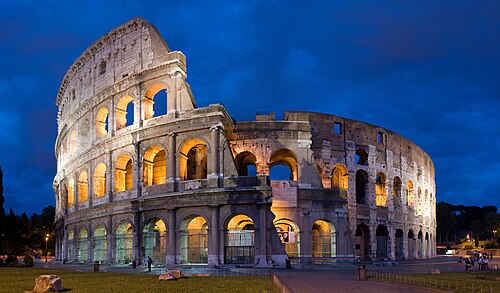
External facade of the Colosseum in Rome on a spring day
The external facade of the Colosseum: the elliptical structure of the Flavian Amphitheatre, nearly 49 metres high, has dominated the urban landscape of Rome for almost two thousand years.

Additional Costs to Bear in Mind

Beyond the base site admission, there are some additional cost items worth knowing about in advance to avoid surprises on the day:

  • Advance planning fee: when you arrange your visit online through official channels or authorised operators, a planning fee of approximately €2 per person is usually applied. It is not a large sum, but it should be factored in.
  • Audio guide: available for hire at the site (or included in some packages), at an additional cost of approximately €5–6. It covers the standard route through the levels open to the public and explains the principal architectural and historical features.
  • Left luggage: for security reasons, large rucksacks and wheeled luggage cannot be taken inside the Colosseum. There is a paid left luggage service in the vicinity.
  • Parking: the area around the Colosseum is subject to ZTL restrictions. Those arriving by car will need to park at a distance and pay for parking, or use shuttle services and public transport. We strongly advise against driving.
Concessions, Discounts and Free Admission: Who Pays Less (or Nothing)

The Colosseum Archaeological Park's pricing structure includes a range of concessions from partial reduction to full free admission. Knowing them in advance can make a significant financial difference, especially for large families or groups with many young people. Below is a complete overview of all categories entitled to special rates.

Under 18 with EU Citizenship: Free Admission

Children under 18 who hold the citizenship of a European Union member state may access the Colosseum, the Roman Forum and the Palatine Hill free of charge, every day of the year, regardless of the date of the visit. The only requirement is to present a valid identity document confirming age and EU nationality. Parents must remember to bring the child's own document, not just their own.

This free admission also applies to children who, while not holding Italian citizenship, are citizens of any EU member state: France, Germany, Spain, Portugal, the Netherlands, Belgium, Poland and all other 27 EU countries. Children from non-EU countries (for example, from the United States, Canada, Australia or Japan) do not benefit from this concession and pay the standard rate.

Ages 18–25, EU Citizens: Reduced Rate

As already noted, young people between 18 and 25 years of age (inclusive) with EU citizenship pay a very reduced rate. This concession ends automatically when the visitor turns 26. It is essential to carry a valid EU identity document on the day of the visit: without it, the standard rate will be charged. No self-declarations are accepted.

Visitors with Disabilities and Accompanying Carers

People with severe disability (officially recognised 100% disability or certified need for assistance) enter the Colosseum and associated sites free of charge. The free admission extends also to one accompanying carer per person with a disability. To access this concession it is necessary to present documentation of the disability issued by recognised public bodies (INPS, local health authority, regional medical committees). Foreign certificates must be translated into Italian or English.

Regarding physical accessibility, the Colosseum has lifts and dedicated routes for visitors with limited mobility on the main levels. Certain areas — such as the underground and levels IV and V — have structural limitations that make them difficult or impossible to access by wheelchair. It is advisable to contact the site in advance to plan the most suitable route.

Official Tourist Guides

Tourist guides holding an official licence recognised at regional or national level enter the Colosseum free of charge when accompanying a group. Free admission is reserved exclusively for the licensed guide, not for the group as a whole. Group members pay the appropriate rate for their own category.

Teachers and School Groups

Teachers accompanying school classes on an organised educational visit may benefit from concessionary rates in specific periods of the year. School groups must be registered in advance and the visit must have documentable educational aims. The conditions for concessionary access for school groups change from year to year: for the most up-to-date details, refer to ticketing.colosseo.it.

The First Sunday of the Month: Free Admission for All

The Italian Ministry of Culture's "Museum Sunday" initiative is one of the most effective tools for bringing citizens — Italian and foreign alike — closer to the national cultural heritage. On the first Sunday of every month, all state museums and sites, including the Colosseum, offer free admission to any visitor, regardless of nationality, age or any other characteristic.

The free admission covers the base site admission (Colosseum + Roman Forum + Palatine Hill). Guided experiences organised by external operators retain their cost: the free admission covers only the institutional component.

Beware of queues: free admission days are the busiest of the year. On some spring and summer Sundays, queues can exceed 3–4 hours. Those with unlimited time who arrive before opening (09:00) can take advantage of this opportunity effectively. Those with a tight schedule who want to make the most of the day may find it more convenient to visit on a standard day with the regular admission.

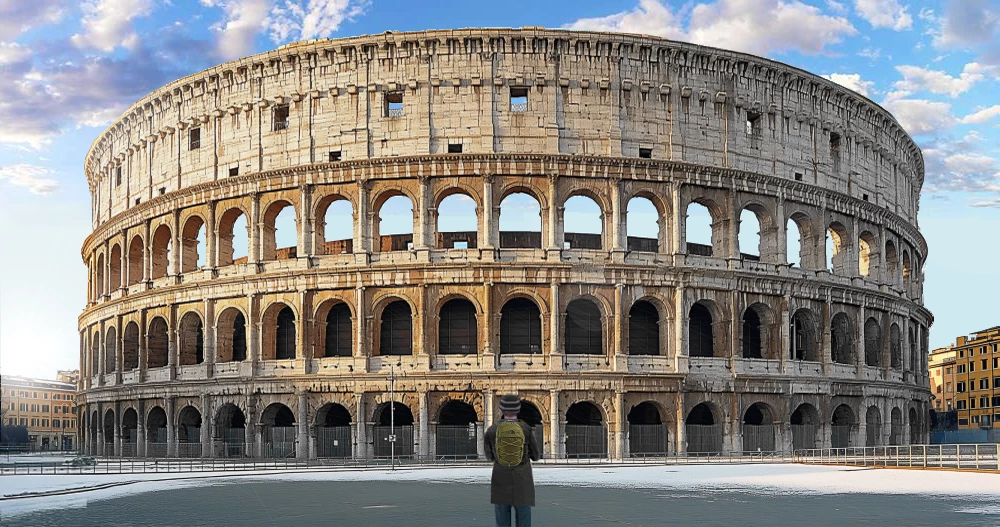
The north side of the Colosseum on a quiet winter day
The Colosseum in winter: the months from November to February offer smaller crowds, cooler temperatures and an evocative atmosphere. An excellent period to visit the monument without long waits.

Complete Cost Comparison: All Visit Types Side by Side

To help you choose the option that best fits your needs and budget, we have compiled a comparison table setting out all the main types of Colosseum visit alongside their indicative costs, duration, areas included and the ideal visitor profile.

Comparison table of costs for visiting the Colosseum in 2026: all available options
Visit Type Indicative Cost What's Included Duration Ideal For
Independent visit (standard) €18 Colosseum + Forum + Palatine Flexible Experienced travellers
Independent + audio guide €23–24 Standard levels + audio commentary 1.5–2 hrs Solo travellers, couples
Standard group guided tour €38–55 Admission + expert guide ~2 hrs First visit, families
Small group guided tour €45–65 Admission + guide (max 12 people) ~2 hrs Quality at value
Underground access tour €58–85 Admission + guide + hypogeum 2.5–3 hrs History enthusiasts
Arena floor access tour €58–85 Admission + guide + arena floor 2.5–3 hrs Exclusive experiences
Upper levels tour €55–80 Admission + guide + levels IV–V ~2.5 hrs Photographers, panoramic views
Evening tour €55–90 Evening admission + guide + special lighting ~2 hrs Unique atmosphere
Private guided tour From €150+ Admission + dedicated guide + personalised route Variable Families, special groups

All prices are indicative and depend on the specific operator and tour. Check current availability and actual pricing through the link below.

View Current Prices and Availability

The Roma Pass: Is It Really Worth It for the Colosseum?

The Roma Pass is a tourist card that combines unlimited use of Rome's public transport network with discounted or free access to a selection of the city's museums and monuments. It is sold in two versions: the 48-hour version (€32) and the 72-hour version (€52). The question most visitors ask is: does the Roma Pass make financial sense for someone whose main goal is the Colosseum?

What the Roma Pass Includes

  • 48-hour version (€32): free access to 1 museum or site, unlimited public transport for 48 hours, reduced admission to subsequent sites
  • 72-hour version (€52): free access to 2 museums or sites, unlimited public transport for 72 hours, reduced admission to subsequent sites
  • The Colosseum counts as one of the free sites in both versions

When the Roma Pass is Worth It

The Roma Pass becomes genuinely worthwhile if, within the validity period, you plan to visit at least three or four paid attractions. The 72-hour version at €52 makes sense if you combine the Colosseum (€18), the Capitoline Museums (€15), the Borghese Gallery (€15) and use the metro several times. In that scenario, the total saving is meaningful.

When the Roma Pass is Not Worth It

If the Colosseum is the only paid site on your programme, the Roma Pass is not cost-effective: you would pay €32 or €52 for something that would otherwise cost €18. Similarly, if you plan to walk everywhere and do not need public transport, the transport component has no value for you.

A practical suggestion: calculate the total cost of all the paid attractions you plan to visit. If the sum exceeds the Roma Pass price by a comfortable margin, the pass makes sense. If not, pay for individual sites as you go.

How to Use the Roma Pass for the Colosseum

The Roma Pass is sold online, at tourist offices and at certain metro stations. When you arrive at the Colosseum, head to the Roma Pass lane (usually separate from the standard admission queue). Show your pass and your identity document, and you will be admitted. Note that the Roma Pass does not provide access to special areas such as the underground or the arena floor: those require a separate guided experience arrangement even for Roma Pass holders.

Practical Guide to Saving Money on Your Colosseum Visit

The Colosseum is not a cheap monument to visit, but there are several entirely legitimate ways to reduce costs without sacrificing quality. Here is a complete summary of all the savings opportunities available in 2026.

1. Use the Free First Sunday

If your travel dates are flexible and coincide with the first Sunday of a month, this is the cheapest option. Arrive at least 30 minutes before the 09:00 opening. The queue will still be long, but arriving early maximises your chances of getting in within a reasonable time. This option is impractical for visitors with tight itineraries.

2. Claim All Concessions You Are Entitled To

Always check whether you or any member of your group qualifies for a free or reduced admission. The most commonly overlooked concession is the €2 rate for EU citizens aged 18–25: many young European visitors simply do not know it exists and pay the full €18. Always carry your identity document.

3. Use the Two-Day Validity Intelligently

The combined €18 pass covers the Colosseum, the Roman Forum and the Palatine Hill for two consecutive days. Rather than rushing through everything in one exhausting day, split the visit: Colosseum on day one, Roman Forum and Palatine on day two. You get a much better experience and the cost per site effectively drops to €6.

4. Visit the Forum from the Forum Entrances

If the Roman Forum is your primary destination and you find the Colosseum queues off-putting, enter from the Via Sacra or Largo Romolo e Remo gateways. The queues at these entrances are typically much shorter. The cost is the same (€18) but the time saved can be considerable.

5. Plan Off-Season

Visiting in November, February or early March means shorter queues, lower demand for guided tours and a more peaceful atmosphere. The experience is arguably better, and you avoid the logistical stress of peak season entirely. Costs are the same but the perceived value is significantly higher.

6. Check for Student and University Agreements

Italian and European university students should check whether their institution has a specific agreement with the Colosseum Archaeological Park. Some Italian universities have negotiated special access arrangements that go beyond the standard EU youth concession. It is worth asking at your student services office before travelling.

For information on the Colosseum's opening hours and the best times to visit with fewer queues, see our dedicated opening hours page. For a full comparison of guided tour options, visit our Guided Tours page.

Frequently Asked Questions: Colosseum Costs & Fees

Clear, up-to-date answers to the most common questions about how much it costs to visit the Colosseum in Rome in 2026.

How much does it cost to visit the Colosseum in 2026?

The standard adult admission is €18, which includes access to the Colosseum, the Roman Forum and the Palatine Hill, valid for 2 consecutive days. EU citizens aged 18–25 pay just €2. Children under 18 from EU countries enter free. For full details and all categories, see the fee table above in this guide.

Does the admission price include the Roman Forum and Palatine Hill?

Yes. The €18 standard admission is a combined pass that gives access to all three sites: the Colosseum, the Roman Forum and the Palatine Hill. The pass is valid for 2 consecutive days from first use, allowing you to spread the visit across two days if you wish. This is one of the best-value cultural passes in Europe.

When can you visit the Colosseum free of charge?

On the first Sunday of every month, the Italian Ministry of Culture's "Museum Sunday" initiative makes admission free for all visitors, regardless of nationality. Be warned: queues on these days can exceed 3–4 hours. Children under 18 from EU countries enter free every day of the year.

Is there a discount for young people and students?

Yes. EU citizens aged 18–25 pay only €2 (reduced rate) — one of the most generous youth concessions in European heritage. A valid EU identity document is required. University students from Italian institutions may also benefit from additional agreements — check with your institution before travelling. Non-EU students pay the standard €18.

Is the Roma Pass worth it for the Colosseum?

The Roma Pass is worth it if you plan to visit at least 3–4 paid sites within the pass's validity period. The 72-hour version (€52) makes financial sense if your itinerary also includes the Capitoline Museums, the Borghese Gallery and other paid attractions. For visitors whose programme centres primarily on the Colosseum, the direct €18 admission is more economical.

How much does a guided tour of the Colosseum cost?

Guided tour costs vary widely by type. A standard group guided tour typically costs €38–55 total (site admission + guide service). Small group tours run approximately €45–65. Tours that include exclusive areas such as the underground or arena floor range from €58–85. Private tours start from approximately €150 for a small group. For a full breakdown, see the comparison table on this page.

Is there free admission for visitors with disabilities?

Yes. Visitors with a severe or total disability (officially recognised 100% disability rating) enter the Colosseum free of charge. One accompanying carer also enters free. The disability documentation must be presented at the entrance. For questions about physical accessibility within the monument, we recommend contacting the Colosseum Archaeological Park in advance to plan the most suitable route.

Ready to Plan Your Colosseum Visit?

Compare all available guided experiences, verify current availability and make the most of your visit to the world's most iconic monument.

Independent information portal. Links to experiences are affiliate links with certified operators.