
Updated Guide 2026

Colosseum Opening Hours Rome:
Schedule, Closures & Best Times to Visit

Seasonally updated 2026 schedules, closure dates, last admission times and crowd-flow analysis. Everything you need to plan the perfect visit to the world's most famous monument.

Independent information portal. Not affiliated with the Parco Archeologico del Colosseo. Links to guided experiences are affiliate links.

Colosseum Opening Hours 2026: Quick Reference

Opening and closing times for the Colosseum in Rome by season in 2026
Period Opens Closes Last Admission
2 January – end of February 09:00 15:30 ~15:00
1 March – 14 March 09:00 16:30 ~16:00
15 March – 31 March 09:00 17:00 ~16:30
1 April – 31 August 09:00 19:15 ~18:45
1 September – 30 September 09:00 19:00 ~18:30
1 October – last Saturday of October 09:00 18:30 ~18:00
After clocks go back (late October) 09:00 16:30 ~16:00
1 November – 31 December 09:00 15:30 ~15:00
1 January, 1 May, 25 December CLOSED

The hours above are indicative and based on the Parco Archeologico del Colosseo calendar. Always verify current data at ticketing.colosseo.it before your visit. This portal is independent and cannot guarantee real-time accuracy of the hours listed.

Colosseum Opening Hours by Season: Complete 2026 Guide

The Colosseum's opening hours are not fixed throughout the year: they vary by season, following a system tied to sunset times that has historical roots in the management of natural lighting. Understanding these hours is essential for organising your visit optimally, especially if you are travelling from abroad and have limited time.

The Colosseum opens every morning at 09:00, without exception, during all periods of the year in which it is operational. It is the closing time that changes, adjusting progressively to the lengthening and shortening of daylight hours. Below is a season-by-season breakdown.

Winter Hours (November – Late February)

During the winter months — from November through to the last Saturday of February — the Colosseum operates on its shortest schedule of the year. Doors open at 09:00 and the monument closes at just 15:30, with the last admission permitted around 15:00. This means visitors have roughly six and a half hours within the daily window.

Winter hours may seem restrictive, but they come with a significant advantage: crowd levels are at their annual minimum. During November, December (outside the Christmas holiday period), January and February, the Colosseum is visited primarily by Italian visitors and European tourists. The result is a quieter atmosphere, considerably shorter queues, and the opportunity to absorb the monument with a degree of tranquillity that is simply impossible during the warmer months.

Those who visit the Colosseum in winter also benefit from extraordinary photographic light: the low December and January sun illuminates the travertine in a raking, oblique manner, accentuating every texture and creating contrasts of light and shadow that photographers spend entire careers pursuing.

Spring Hours (March)

With the arrival of spring, the hours begin to expand gradually. From 1 March, closing time shifts to 16:30, and from 15 March it advances further to 17:00. The clocks-forward change — which in Italy falls on the last Sunday of March — adds an hour of afternoon light, effectively extending the possibilities for afternoon visits.

March is one of the best months to visit the Colosseum: the climate is mild, international tourists are beginning to arrive but the major crowds have not yet peaked, and the days are visibly lengthening. The vegetation around the archaeological area starts to revive, making exterior views particularly photogenic.

Summer Hours (April – August)

From 1 April to 31 August the Colosseum is open until 19:15, giving visitors a daily window of over ten hours. This is the period when the monument is most heavily visited, but also when it is possible to experience it during the late afternoon hours, when sunset light transforms it into a visually memorable spectacle.

In summer, the extended opening hours allow for late-afternoon visits that take advantage of the ebbing of daytime crowds. Many experienced visitors deliberately choose the window from 17:00 to 19:00 in summer: by these hours, much of the daytime flow has dispersed, the light is golden and warm, and the experience takes on a quality entirely different from the frantic July morning rush.

During the summer — typically the months of June, July and August — the Parco Archeologico organises special evening openings with cultural events and night-time guided visits. These occasions, with very limited availability, make it possible to experience the Colosseum at night, illuminated by atmospheric lighting installations. The availability of these events must be verified directly at the official website ticketing.colosseo.it.
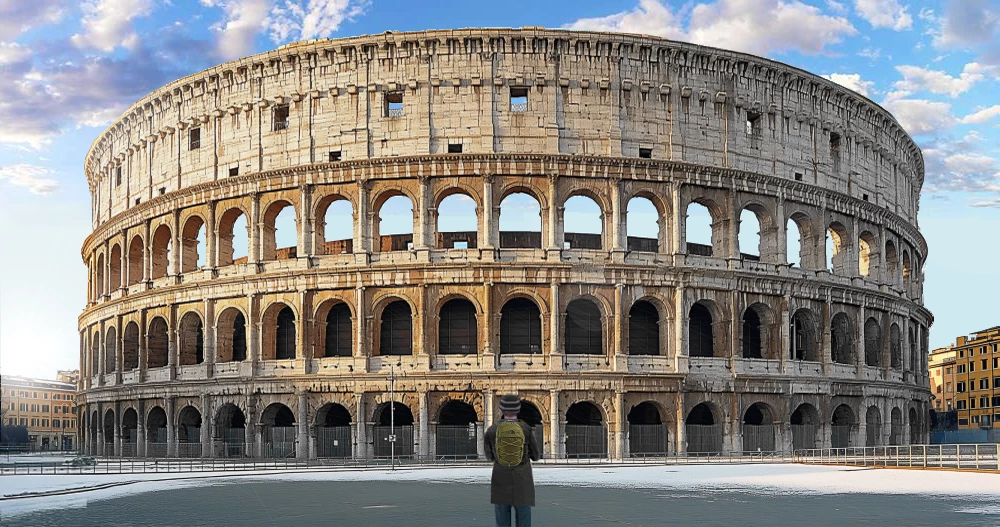
The north side of the Colosseum photographed in winter with few visitors
The north side of the Colosseum in winter: low light accentuates every detail of the travertine and the reduced visitor numbers make for a more contemplative experience.

Autumn Hours (September – Late October)

September is often considered the golden month for visiting the Colosseum: summer temperatures begin to drop, the summer holidays are over for most European visitors, and yet the monument remains open until 19:00. The combination of pleasant climate, still-long days and progressively diminishing crowds makes September an almost ideal choice for international visitors.

With the arrival of October, the hours begin to contract once more. Until the last Saturday of October, closing is at 18:30; after the clocks go back (on the last Sunday of October), the hours revert to the autumn schedule with closing at 16:30. Visitors to the Colosseum in October must bear this variation in mind: the loss of an hour of light occurs abruptly and can catch unprepared travellers off guard.

The Three Annual Closure Dates

The Colosseum is open 362 days a year. Only three dates mark a complete closure of the monument:

  • 1 January (New Year's Day): the Colosseum is closed for the entire day. Many tourists arrive in Rome for New Year celebrations and find themselves facing locked gates. Bear this firmly in mind if you are planning an end-of-year trip.
  • 1 May (Labour Day): this date also means total closure. It is one of the days when Rome partly empties out and many Romans themselves leave the city.
  • 25 December (Christmas Day): the Colosseum is closed. However, on 26 December (Boxing Day) the monument is normally open with standard winter hours.

Beyond these three dates, extraordinary closures can occur for special events, urgent maintenance works or decisions by the competent authorities. Before any visit, especially if you have arranged transport and accommodation specifically around the Colosseum, always verify the opening status on the official website or contact the Parco Archeologico directly.
Timing Is Everything: Crowd Analysis by Hour

Choosing the right time of day can radically transform your Colosseum experience. Here is a detailed analysis based on crowd-flow patterns recorded over many years, with practical guidance for every part of the day.

09:00–10:00

First Opening: The Golden Window

The first hour after opening is statistically the quietest time slot of the entire day. Visitors who arrive at 09:00 or shortly after find a Colosseum where it is possible to move freely, photograph without crowds in the background, and absorb the atmosphere with a quality that is difficult to replicate in later hours.

During this period, morning light enters laterally through the eastern arches of the Colosseum, creating spectacular plays of light and shadow on the internal structures. Travel photographers know well that this is the hour not to miss.

Practical tip: To be among the first through the gates, plan your experience in advance. During high season, morning tours fill up quickly.

10:00–11:30

Mid-Morning: Visitor Flow Increasing

From 10:00 onwards the flow of visitors increases noticeably. Rome's hotels typically serve breakfast until 10:00–10:30, and tourists on holiday tend to arrive at the Colosseum during this window. Queues at the counters begin to lengthen, and inside the monument starts to fill.

Those who have already arranged their visit in advance can still have a good experience during this period, as they bypass the external queues. However, the internal corridors begin to become more crowded, particularly at the most popular viewpoints.

Practical tip: If you are in this time slot, head immediately to the third level. Most visitors congregate on the first and second floors, while the upper levels offer a markedly quieter experience.

11:30–14:00

Peak Hours: The Time to Avoid

This is the time slot with the highest concentration of visitors throughout the day. Queues at the counters reach their peak, the internal corridors are congested, and the visit risks becoming a slow, frustrating procession through tour groups.

During summer, this period is compounded by the heat problem: the Colosseum, being an open structure with no air conditioning, becomes a genuine heat trap during the central hours of the day. The stone levels accumulate heat and the arena zones, exposed to direct sunlight, can reach very high temperatures.

Practical tip: If for any reason you must visit during this window, carry generous amounts of water, apply sun protection, and choose routes that favour shaded areas. A hat is essential in summer.

14:00–16:00

Early Afternoon: A Modest Easing

After 14:00 the visitor flow begins a slow decline, partly related to the Italian lunch tradition and to the heat that discourages sightseeing. However, in high season this remains a high-density time slot. Departing visitors overlap with arrivals, creating a constant shuffle.

One positive characteristic of this window, especially in summer, is that the light begins to shift westward, significantly changing the quality of illumination inside the Colosseum. The eastern sections move into shadow, while the western areas begin to receive a softer, more golden light.

Practical tip: If you are planning to include both the Colosseum and the Roman Forum in the same day, this is a good time to move towards the Forum, which is typically less crowded than the Colosseum in the afternoon.

16:00–18:00

Late Afternoon: The Visit Reborn

From 16:00, and progressively more markedly from 17:00, the situation at the Colosseum changes dramatically. Many organised group tours with daytime schedules have already departed; families with young children often return to their hotels to rest; visitors with a half-day available begin the final segment of their day.

The result is a Colosseum noticeably emptier than at the midday peak, combined with light quality that reaches its apex. The afternoon sun illuminates the west facade of the Colosseum and penetrates the interior through the western arches, creating shafts of golden light that cross the monument like natural spotlights.

Practical tip: In summer, this is the window that many Colosseum experts consider the absolute best. The combination of reduced crowds and cinematic light quality is unmatched at any other time of day.

18:00–Closing

Final Hour: An Almost Exclusive Atmosphere

The last hour before closing is, together with the first morning hour, the quietest period of the entire day. Those who manage to access in the late afternoon and remain inside until closing experience something that few casual tourists ever get to know.

In summer, when the Colosseum closes at 19:15, the final hours are characterised by golden, warm light that transforms the travertine almost to gold. The arches fill with long shadows, the contrasts become more dramatic, and the emotional connection with the place reaches levels that are difficult to put into words.

Practical tip: In winter, when closing occurs at just 15:30, the final hour coincides with early sunset light — equally evocative. Even here, the reduced presence of other visitors amplifies the experience.

When to Visit the Colosseum: A Season-by-Season Analysis

The question "when to visit the Colosseum" does not have a universally valid answer: it depends on your priorities, your tolerance for crowds, your budget, and the type of experience you are looking for. This guide analyses the pros and cons of each season to help you make the best choice for your circumstances.

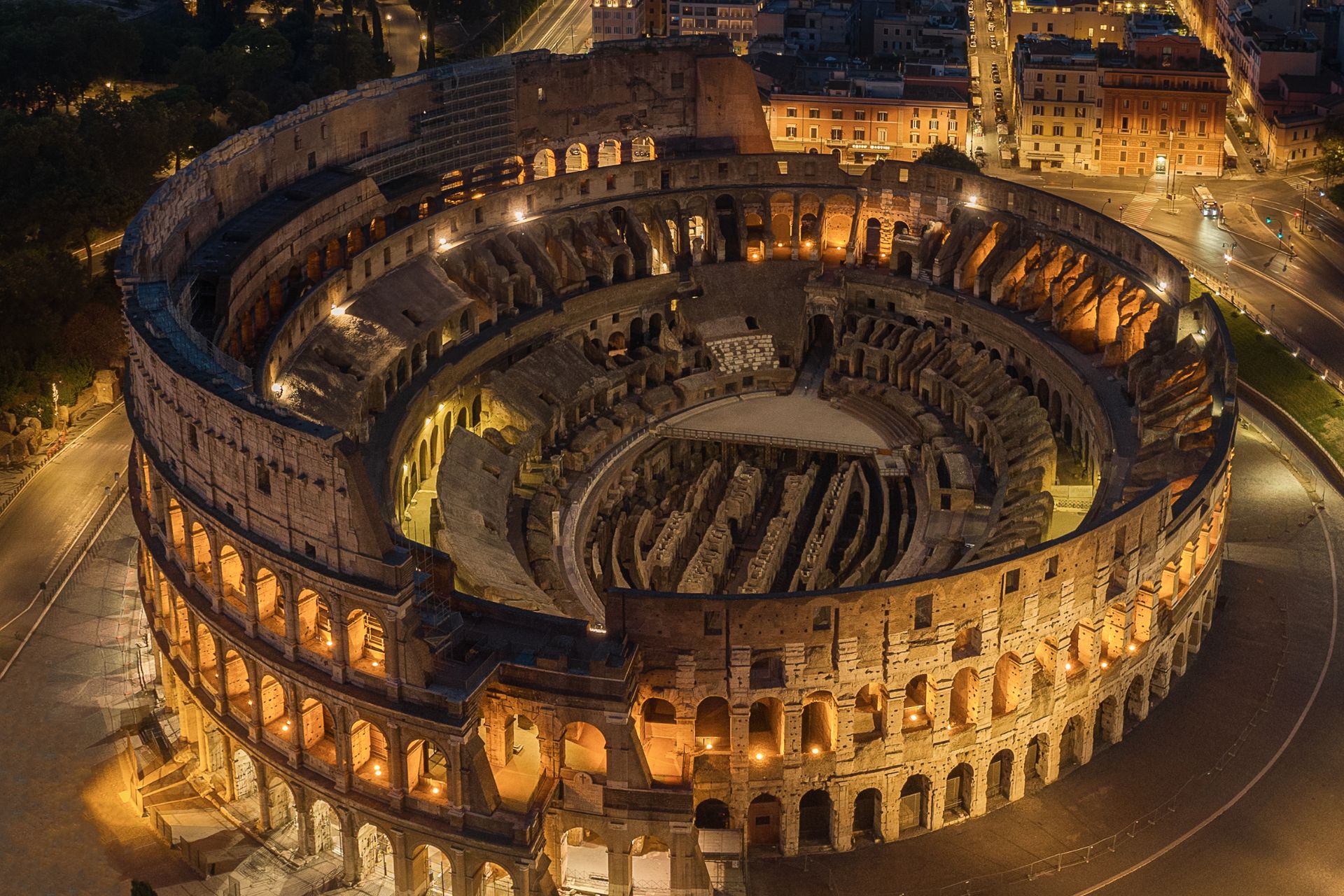
Aerial view of the Colosseum in Rome at the twilight hour, summer dusk
The Colosseum seen from above at summer dusk: this aerial perspective reveals the perfect elliptical structure of the Flavian Amphitheatre and its position at the heart of Rome's archaeological area.

Winter (December – February): For Travellers Seeking the Authentic

Winter is the least-frequented season and, in certain respects, the most fascinating time to visit the Colosseum. Crowds drop dramatically — especially during January and February — and the monument recovers a melancholic, solemn atmosphere reminiscent of the great Romantic engravings made by nineteenth-century travellers on the Grand Tour.

The disadvantages are real: hours are short (closing at 15:30), the cold can be intense especially with wind, and the risk of rain is higher. The Christmas period, from around 20 December to 6 January, sees a spike in visitors that partially reduces the advantage of the winter low season.

The most recommended month in winter is February: the hours extend compared to December and January, yet crowds are still minimal. Clear February days offer extraordinary visibility and unique photographic light conditions.

Ideal for: couples, solo travellers, photographers, history enthusiasts who value concentration and quiet.

Spring (March – May): High Season with Manageable Crowds

Spring — particularly March and early April — represents an almost perfect balance of climate, hours and visitor numbers. Temperatures are pleasant, the days are progressively lengthening, and tourist flows have not yet reached their summer peak. Rome is extraordinarily beautiful in spring, with soft light and the vivid colours of the vegetation renewing itself around the archaeological area.

From mid-April, and especially during the weeks around Easter, the situation changes sharply: the Colosseum fills, queues increase significantly, and late-spring weekends can resemble the height of summer. The 25 April national holiday (Liberation Day) and 1 May traditionally bring large flows of Italian visitors from across the country — the latter date is also a Colosseum closure day.

Ideal for: families, first-time visitors to Rome, travellers seeking a balance between quality and accessibility.

Summer (June – August): High Season, Maximum Crowds

Summer is when the Colosseum is at its most international and most dynamic — but also its most congested. July and August see impressive queues, high temperatures, and the need for particularly careful planning to avoid spending hours waiting rather than exploring the monument.

The main advantage of summer is the extended opening until 19:15 and the possibility of attending special evening openings available only during this period. Those who succeed in visiting during the right time windows — very early morning or late afternoon — can have an extraordinary experience even in the height of summer.

Heat is a factor not to underestimate: carrying water is essential, sun protection is critical, and the central hours of the day (11:00–15:00) should be avoided for reasons of comfort as much as for crowd levels.

Ideal for: those with fixed holiday dates, families with school-age children who cannot travel outside the school season, those wishing to access the special evening openings.

Autumn (September – November): The Season Recommended by Experts

September and October are unanimously considered the best months of the year to visit the Colosseum by those who know Rome well. The summer temperatures abate, the holidays end for most European and North American tourists, the hours are still long (until 19:00 in September), and the monument recovers an accessibility that is simply impossible in high summer.

November is an underrated month: the weather can be variable but crowds are minimal and the Colosseum on an autumn day with low light has an unparalleled cinematic atmosphere. The few visitors present — often history enthusiasts or experienced travellers — contribute to a quiet, reflective visiting environment.

Ideal for: couples, independent travellers, photographers, visitors returning to Rome for a second or third time who seek an experience beyond the standard tourist visit.

Golden Hour and Photography at the Colosseum: The Best Light Windows

The Colosseum is one of the most photographed subjects in the world. And yet, despite the billions of shots in circulation, it is still possible to create extraordinary and personal images — if you choose the right moment.

Dawn: The Purest Light

The first light of day, in the minutes immediately before and after sunrise, transforms the Colosseum in spectacular fashion. The raking dawn light illuminates the east facade of the monument — the best-preserved side, the one facing Via Sacra — with a pink-orange tone that turns the travertine almost to gold. At this moment, the contrast between illuminated and shadowed arches is at its maximum.

Practically speaking, dawn occurs before the monument's opening time in almost all months of the year. This means the best dawn shots are taken from outside: from the Piazza del Colosseo, from the Arch of Constantine, or from the Via Sacra leading towards the Roman Forum. All these positions are freely accessible and allow you to approach the monument without waiting for it to open.

The Sunset Golden Hour (Interior)

In spring and summer, the final two hours of opening coincide with the sunset golden hour. The sun, setting in the west, begins to illuminate the western arches of the Colosseum with increasingly warm and golden light. From inside — particularly from the second and third levels — this light creates scenes of great visual power: shafts of light crossing the interior space, long shadows accentuating spatial depth, and a "cinematic" light quality that is difficult to replicate at any other time.

Particularly compelling is the view from inside towards the north face (the best preserved): the layered play of superimposed arches, illuminated by the warm afternoon light, offers photographic compositions of great impact even with straightforward equipment such as a current-generation smartphone.

Evening Openings: Photography in the Night

During periods when the Parco Archeologico organises evening openings, the Colosseum illuminated at night becomes a completely different photographic subject. The artificial lighting — designed to enhance the three-dimensional structure of the monument — creates dramatic contrasts and atmospheres that simply do not exist by day. The travertine walls, which appear beige-white in daylight, take on amber and ochre tones at night that evoke the lived-in stone of two thousand years.

For night-time exterior photography, the best position remains the Piazza del Colosseo and, in particular, the long pavement running along Via dei Fori Imperiali: from here one can frame the Colosseum with the illuminated Imperial Forums in the background, in compositions that often include light trails from passing cars, creating striking visual effects.

Practical Photography Tips

  • Bring a water bottle: physical condition affects the quality of photographic attention, and dehydrating in front of your subject is counterproductive
  • Tripods are prohibited inside without specific authorisation: for long exposures, seek a stable resting surface (handrails, columns, etc.)
  • Flash photography is prohibited inside: use flash outside as well with restraint so as not to disturb other visitors
  • Drones are absolutely prohibited in the Parco Archeologico area: penalties are severe and immediate
  • For black and white photography, winter offers superior natural light contrasts compared to summer
  • The third level (accessible on the standard visit) offers the best interior architectural compositions, with perspectives across multiple layers of superimposed arches

Before and After Your Visit: How to Organise the Day Around Your Schedule

The time you choose to visit the Colosseum also determines the entire context of your day: what to do beforehand, where to eat, what to see afterwards. Here are some practical suggestions organised by visiting time slot.

If You Visit in the Morning (09:00–12:00)

Arriving at the Colosseum in the early morning is the choice that gives maximum flexibility to the rest of the day. After the visit, you will have the entire day ahead to explore the surroundings. The most natural itinerary is to continue within the archaeological area: descend towards the Roman Forum and climb up to the Palatine Hill, making full use of the combination pass that includes all three sites. With a morning visit to the Colosseum and an afternoon at the Forum and Palatine, you cover one of the most extraordinarily rich archaeological complexes in the ancient world.

For lunch, the neighbourhood around the Colosseum offers many options, but prices tend to be elevated in the restaurants immediately on the piazza. Walk five minutes towards the Testaccio neighbourhood or along Via Labicana to find more authentic, less touristy trattorias.

If You Visit in the Afternoon (14:00–17:00)

Those who choose the afternoon often spend their morning in another part of the city. An afternoon at the Colosseum works well in combination with a morning at the Aventine hill (with the famous keyhole view of St Peter's dome at the Knights of Malta headquarters), at the Circus Maximus, or at the Capitoline Museums.

After an afternoon visit to the Colosseum, returning to the city centre is straightforward: Line B of the Metro takes you directly to Termini in just a few minutes, from which any part of the city is easily reachable. In the evening, the area of the Imperial Forums is wonderful to stroll through after dinner.

If You Visit in the Late Afternoon (17:00 onwards, summer only)

The late afternoon visit in summer is, for many, the best choice in terms of experiential quality. Before the visit, the morning and early afternoon can be spent in other corners of the city — Trastevere, the Pantheon, Piazza Navona — reaching the Colosseum area in the early afternoon for a coffee and a leisurely approach walk.

After the evening visit, sunset time coincides almost exactly with exiting the Colosseum. The area around the monument, bathed in the golden light of dusk, is splendid for a walk: the Arch of Constantine, the Via Sacra, the panoramic view across the Imperial Forums. Many visitors choose to round off the evening with dinner in the Celio neighbourhood — the small, green hill rarely frequented by tourists, home to excellent local trattorias.

How to Reach the Colosseum

The Colosseum is easily reached by Metro Line B, station "Colosseo": one of the most central and frequently served stops in Rome. The station is literally across from the monument — as soon as you exit, the Colosseum is in front of you. Numerous bus lines are also available (51, 75, 85, 87, 117) and Tram 3 (stop "Colosseo/Via Labicana").

Arriving by car is strongly discouraged: traffic in the historic centre is intense, parking near the Colosseum is practically non-existent, and the area is subject to ZTL (Limited Traffic Zone) restrictions during the central hours of the day. Those arriving by train at Roma Termini can reach the Colosseum in approximately 8 minutes by Metro, with no changes.

For updated information on real-time visitor numbers and current visit conditions, consult our Visit the Colosseum Today page.

Evening Openings and Special Events at the Colosseum

Beyond the regular annual calendar, the Parco Archeologico del Colosseo periodically organises special events that make it possible to experience the monument in a manner entirely different from the standard daytime visit. These occasions, with very limited availability, are among the most sought-after experiences for the most dedicated visitors.

Summer Night Visits

During the summer months — typically between June and September — the Colosseum offers evening openings with guided night-time visits. The atmospheric lighting of the monument, designed to enhance the volumes and textures of the architecture, creates an atmosphere completely unlike the daytime experience. The travertine walls, which appear whitish and neutral by day, acquire amber and brown tones at night that evoke the patina of two millennia.

Night visits typically include specific guided routes, different from the daytime routes, which lead to areas of the monument that are particularly evocative under artificial lighting. Availability is very limited — the number of visitors permitted during night openings is significantly lower than the daytime capacity — and places are taken well in advance.

To check available dates and how to arrange access, it is necessary to consult the official website ticketing.colosseo.it well in advance of your desired date.

European Museum Night (Notte dei Musei)

On the occasion of the European Night of Museums — held every year in the second half of May — many Italian museums and cultural sites open free of charge in the evening. The Colosseum often participates in this initiative with an evening opening at a nominal or free rate. Queues at these events are notoriously very long, but the opportunity to visit the monument at night at reduced cost attracts thousands of Romans and tourists each year.

The First Sunday of the Month

The Ministry of Culture promotes the "Sunday at the Museum" initiative: every first Sunday of the month, access to the Colosseum (and to all state museums and sites) is free for all visitors. This is an excellent opportunity for anyone already in Rome who had not planned a paid visit, but it requires careful logistical management: queues on free Sundays can exceed three to four hours during the first Sundays of April, May and June.

The advice for free Sundays is the same as for high season in general: arrive at opening time, or better still, treat yourself to an arranged guided experience that provides dedicated access. Guided experiences with dedicated access operate even on free Sundays, with facilitated entry to the monument.

Extraordinary Openings for Special Occasions

On the occasion of historical anniversaries, national or international cultural events, and particular celebrations, the Parco Archeologico may organise extraordinary openings and special programmes. The 21 April anniversary (dies natalis of Rome, the traditional birthday of the city) is often the occasion for specific events in the Roman Forum and Colosseum area. The Republic Day of 2 June is another date on which Rome dresses in celebration and the archaeological area may be involved in special initiatives.

To stay updated on all special openings and scheduled events, the most reliable source is always the official website of the Parco Archeologico del Colosseo, where the events calendar is regularly updated.

Planning Your Visit in Advance

Regardless of the season or time slot chosen, the key to an optimal Colosseum experience is advance planning. In high season, guided visits with dedicated access — which allow visitors to bypass the long standard queues — often sell out several days or weeks in advance. Experiences at the underground levels and upper tiers, available with even more limited availability, can sell out weeks ahead.

For guided experiences at the Colosseum, the general rule is: the later you arrange, the fewer options you will find available. Even in low season (November–February), the limited-access underground tours can sell out more than a week in advance.

Consult also our comprehensive guide to guided tours of the Colosseum to compare the options available and choose the one most suited to your needs and interests.

Expert Tips: How to Choose Your Optimal Time Window

Fifteen years of Colosseum visits in every season and every time slot have taught one fundamental lesson: the timing of your visit matters as much as any other variable in your planning. Here are our recommendations for every type of visitor.

01

For Those with Only One Day in Rome

If you have only one day to see the Colosseum and the entire archaeological site (Roman Forum + Palatine Hill), the best strategy is to start at the Palatine Hill at 09:00, descend to the Forum mid-morning, and conclude at the Colosseum in the late afternoon, when crowds have thinned. In this way you avoid peak hours at the Colosseum while covering all three sites in reverse order from the tourist masses.

02

For Photographers

The absolute optimal window is dawn in any season. For exterior shots, position yourself in front of the north side of the Colosseum about 30 minutes before sunrise. For interior shots, the first opening hour (09:00–10:00) offers soft natural light and reduced crowds. In summer, add the evening visit for the golden hour interior shots. Under no circumstances miss the late summer afternoon light — it is irreplaceable.

03

For Families with Children

With young children, early morning is the ideal time: children are fresher and more engaged, crowds are smaller, and the whole day is still ahead. Avoid the central hours in summer at all costs — heat and crowds combined can make the visit extremely difficult with children under eight. A guided experience specifically designed for families, with narrative adapted for younger visitors, transforms the visit into an engaging adventure.

04

For Senior Visitors or Those with Reduced Mobility

For visitors with mobility difficulties, early morning and late afternoon are the ideal windows: fewer crowds means less jostling, less pressure in the corridors, and the ability to proceed at your own pace. In summer, avoid the hottest central hours: the absence of air conditioning makes the internal levels very hot from 11:00 onwards. The Colosseum has lifts for the standard levels: verify availability in advance by contacting the Parco Archeologico.

05

For Return Visitors (Not Your First Time)

Those who already know the Colosseum should explore the time slots and seasons not yet experienced. If your first visit was in summer, try winter — you will discover an entirely different monument. If you already know the standard levels, consider a guided experience to the underground or upper tiers. The Colosseum's floor plan conceals rarely-visited corners that change completely depending on the light and the moment of the day.

06

For Those Who Absolutely Want to Avoid Crowds

The perfect combination: first week of November or February, Tuesday or Wednesday (the quietest days of the week), arrival at 09:00. Under these conditions you will find the Colosseum almost empty. Add an expert guide who knows the less-trodden routes, and you will have an experience that the vast majority of Colosseum visitors have never had the opportunity to encounter.

Frequently Asked Questions: Colosseum Opening Hours

Answers to the most common questions from visitors planning a trip to the Colosseum in Rome in 2026.

What time does the Colosseum open in Rome?

The Colosseum opens every day at 09:00, year-round, with the exception of the three annual closure days (1 January, 1 May, 25 December). The opening time is fixed across all seasons; it is the closing time that changes significantly: in summer (April–August) the Colosseum closes at 19:15, while in winter (November–late February) it closes as early as 15:30.

When is the best time to visit the Colosseum to avoid crowds?

The quietest months are January, February and November. During high season (April–October), the least crowded times of day are the first hour after opening (09:00–10:00) and the final two hours before evening closing. The 11:00–15:00 window in spring and summer must be absolutely avoided: this is the peak crowd period of the entire day.

Is the Colosseum open every day?

The Colosseum is open 362 days a year. The only three annual closure dates are: 1 January (New Year's Day), 1 May (Labour Day) and 25 December (Christmas Day). On these days the monument is completely closed to the public. Extraordinary closures can also occur for exceptional events: always verify on ticketing.colosseo.it before your visit.

What is the last admission time at the Colosseum?

Last admission to the Colosseum is permitted approximately 30 minutes before the official closing time. In summer (closing at 19:15), last admission is therefore around 18:45. In winter (closing at 15:30), last admission is around 15:00. It is strongly recommended to arrive at least one hour before closing to have sufficient time for a complete visit.

What are the Colosseum summer 2026 opening hours?

In summer 2026, from 1 April to 31 August, the Colosseum is open from 09:00 to 19:15. This is the period with the longest daily schedule of the year. Special evening openings with night-time events may also be available in summer, with limited availability and a variable calendar. Check ticketing.colosseo.it for details.

Does the Colosseum offer evening or night openings?

Yes, the Colosseum periodically organises evening and night openings, especially during the summer months (June–September) and on the occasion of special cultural events. Night visits feature atmospheric lighting and dedicated guided routes. Availability is very limited and varies year to year. Check the calendar on ticketing.colosseo.it and plan well in advance.

What is the best time of day to photograph the Colosseum?

For exterior photography, the golden hour at sunset (April–September) is ideal: low light illuminates the travertine with warm tones and shadow contrasts are at their peak. For interior shots with fewer visitors, the first hour after opening (09:00–10:00) is the best choice. In winter, the low morning and afternoon sun creates unique lighting effects that compensate for the shorter hours.

Do the Colosseum hours change on public holidays?

Generally, the Colosseum maintains the same standard seasonal hours even on public holidays, with the exception of the three total closure dates (1 January, 1 May, 25 December). Boxing Day (26 December), Epiphany (6 January), Easter Monday and the Feast of the Assumption (15 August) are all normally open days with standard seasonal hours. In certain specific religious holidays, minor variations may occur: always verify on the official website in the weeks before your visit.

Plan Every Aspect of Your Colosseum Visit

Now that you know the hours, explore our other guides to plan the perfect visit from every angle.

Have You Chosen the Right Moment?

Now that you know the best hours and the quietest time windows, the next step is to plan your experience. Browse the guided experiences available on your chosen dates and secure your place well in advance.

Independent information portal. Links to guided experiences are affiliate links with certified operators.