
Updated Guide 2026

Colosseum Underground:
Complete Guide to the Hypogeum and Underground Tour

Descend beneath the arena where gladiators and wild beasts waited for the moment of combat. The Colosseum hypogeum is a system of galleries, cages, trapdoors and hoisting mechanisms that has astonished the world for nearly two thousand years. This is the definitive guide to understanding it and experiencing it.

Independent information portal. Not affiliated with the Colosseum Archaeological Park. Links to guided experiences are affiliate links.

Colosseum Underground: Key Facts for 2026

Summary of the main facts for visiting the Colosseum hypogeum in 2026
Aspect Detail Notes
Access Only via dedicated guided tour Cannot be visited independently
Tour duration 2.5 – 3 hours total ~45–60 min in the hypogeum itself
Group size Maximum 10–20 people Varies by operator; small groups preferable
Availability Limited; advance planning essential High season: up to 7–10 days ahead
Physical requirements Stairs, narrow corridors, uneven surfaces Not suitable for severely limited mobility
Temperature 15–18°C year-round Bring a light extra layer
Photography Permitted without flash Low light; a camera with good ISO performance recommended
Language Available in Italian and English Check availability for other languages

The Colosseum Hypogeum: History and Origins of the Underground System

When Emperor Vespasian laid the first stone of the Flavian Amphitheatre around 70 AD, the original design did not include the underground as we know it today. The subterranean structure we now call the hypogeum — from the Greek hypogaion, meaning "below the earth" — was added in a second phase of construction, under Emperor Domitian, completed around 80–82 AD.

Before the hypogeum was built, the Colosseum's arena had hosted naval battles (naumachiae): the basin was flooded with water and the battles took place directly on the water in full view of the spectators. With the introduction of the underground system, this type of aquatic spectacle ceased entirely, replaced by a far more sophisticated mechanism for managing the logistics of the games.

Why the Hypogeum Was Built

The decision to build the underground was driven by both practical and aesthetic necessity. Previously, gladiators and animals were brought into the arena through the normal access routes, visible to the public. This compromised the element of surprise — fundamental to a spectacle designed to impress and astonish. With the hypogeum, everything could appear from above, through trapdoors in the arena floor, with a theatrical effect of extraordinary impact on the audience of the time.

Emperor Domitian, well known for his passion for theatre and elaborate spectacle, wanted the Colosseum to become a space where engineering and theatrical art fused indissolubly. The hypogeum was the result of this vision: not merely an underground storage facility, but a complex theatrical machine that transformed the arena into a stage capable of continuously surprising its audience.
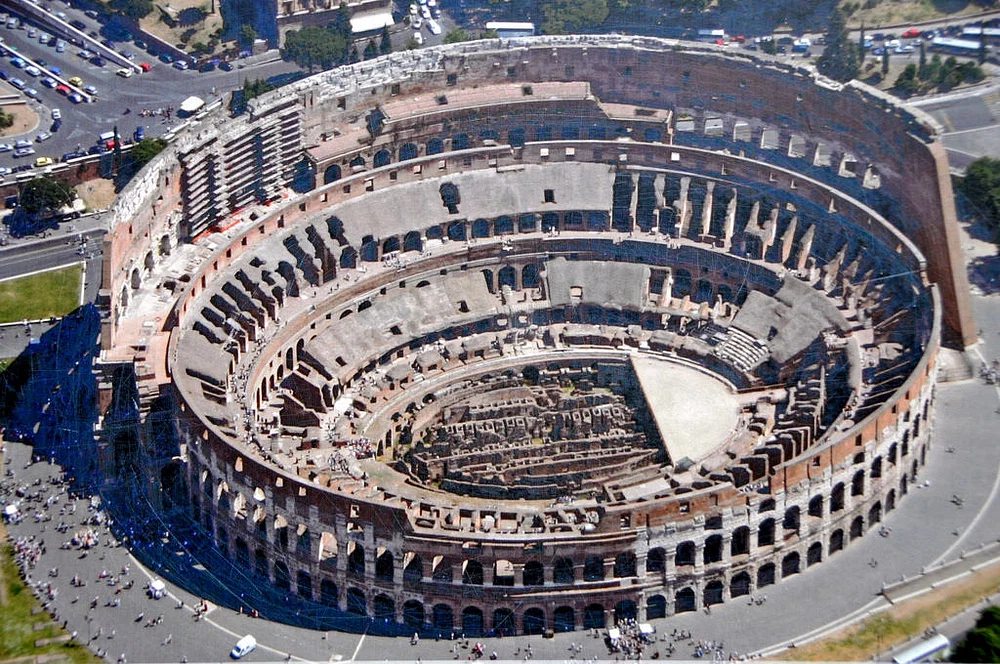
View of the Colosseum hypogeum: the underground galleries of the Flavian Amphitheatre with the hoisting systems visible
The Colosseum hypogeum seen from above: the parallel galleries, the brick walls and the vertical shafts where the hoisting systems were installed are clearly visible. One of the most sophisticated engineering structures of antiquity.

Construction: Techniques and Materials

The hypogeum was built with Roman brick (opus testaceum), a technique that guaranteed solidity and resistance to moisture. The main galleries run in radial and perpendicular directions, forming a grid that mirrors the overall elliptical structure of the Colosseum. Two principal corridors cross the hypogeum from east to west and from north to south, creating an internal navigation system for staff during the spectacles.

The Roman engineers brilliantly solved the drainage problem: the subsoil in that area of Rome was subject to Tiber flooding and the moisture of the marshy ground drained to build the Colosseum. The underground drainage system was designed so that rainwater and waste water flowed through dedicated conduits into the Cloaca Maxima.

  • Built under Domitian between 80 and 82 AD, second phase of the Flavian Amphitheatre
  • Total area: over 1,300 square metres of galleries and cells
  • Two superimposed levels with parallel galleries and connecting corridors
  • Over 28 lifting shafts distributed along the main galleries
  • Integrated drainage system within the foundation structure
  • Roman brick walls of variable thickness, still in excellent condition
What You See Underground: Tunnels, Cages and Arena Mechanisms

Descending into the Colosseum underground means stepping literally into the backstage of the most famous spectacle of the ancient world. Every element of the hypogeum served a precise function, and understanding that function allows you to see the Colosseum with completely different eyes. Here is what you encounter during the guided underground tour.

The Main Galleries: The Arteries of the Subterranean World

The first thing that strikes visitors when descending underground is the scale of the system. The main galleries, approximately 4–5 metres wide, were the principal communication routes between the different operational areas. During a day of spectacle, hundreds of people moved through this labyrinth: gladiators, bestiarii (animal trainers), slaves, machinists, doctors, imperial officials.

The brick walls still bear today the marks of intensive use: iron rings for restraining animals, niches for illuminating torches, wear patterns on the floor corresponding to the most heavily trafficked routes. Every gallery tells the story of the thousands of people who walked through it over nearly four centuries of spectacle.

The Gladiators' Cells

Along the galleries, cells of varying sizes open off the main corridors — some very small. These cells served as waiting areas for gladiators before their turn in the arena. They were not permanent confinement cells — gladiators lived in the scholae gladiatorum, the barracks-schools in the vicinity of the Colosseum — but temporary waiting rooms, not unlike the changing rooms of a modern stadium, with all the tension that implies.

Some cells preserve graffiti scratched into the walls: names, small figures, marks that scholars interpret as messages left by gladiators while waiting. The oldest identifiable graffito dates to the 1st century AD. The researcher Kathleen Coleman of Harvard University has described these marks as "the silent voice of those who had no place in official history".

The Animal Cages: The Enclosure System

One of the most striking elements of the underground is the system of cages and enclosures for exotic animals. The venationes — the animal hunts staged in the arena — required the management of hundreds of wild animals: lions, tigers, leopards, bears, elephants, rhinoceroses, hippopotamuses. Animals brought from every corner of the Roman Empire, from the Germanic forests to the African savannahs.

The cages were built from timber reinforced with iron bars, positioned along the lateral galleries. The largest enclosures could contain animals of considerable size. The remains of the metal fixture attachments are still visible in the hypogeum walls. Particular care was taken to separate species: predators and prey could not be in the same galleries without significantly reducing the number of "performers" before the show.

Internal view of the Colosseum looking down towards the hypogeum: the underground corridors visible beneath the arena level
View from inside the Colosseum looking downward: the structure of the hypogeum is clearly visible beneath the arena level. The parallel galleries and hoisting shaft openings are recognisable even from above.

The Hoisting Mechanisms: The Technology That Amazed Rome

The most sophisticated mechanism in the hypogeum was the hoisting system — known to modern scholars as capstans. Along the galleries, the vertical shafts are still visible — today open at the top towards the arena — that housed these lifting systems.

Each hoisting mechanism consisted of a horizontal capstan operated by four men walking in a circle pushing the radial levers. A system of ropes, cables and counterweights transferred the rotational force upward, raising platforms loaded with cages or theatrical scenery. The lifting time from standstill to arena level was approximately 30–60 seconds, depending on the load.

The entire system was extraordinarily complex for its era: the 28 capstans could operate simultaneously, which means that in a single spectacle, dozens of animals or gladiators could emerge from the arena floor almost at the same moment. The effect on the audience was that of a "magical" appearance — the animals seemed to spring from the earth itself.

The Trapdoors: The Interface Between Above and Below

The trapdoors were the final element in the system. Positioned in the wooden arena floor, they opened upward by means of a counterweight mechanism activated by the machinists in the hypogeum. Each trapdoor was paired with a hoisting shaft below, creating a direct pathway from the cage in the hypogeum to the heart of the arena.

The trapdoor openings are still visible in the hypogeum, distributed along the galleries in a regular pattern. The sizes varied: some were large enough to allow an adult lion or a theatrical set piece to pass through, while others were designed specifically for single gladiators or small props. Scholars have identified at least 28 trapdoor positions in the original layout, arranged symmetrically relative to the longitudinal axis of the arena.

The Lighting and Ventilation System

A frequently overlooked aspect of the hypogeum is the lighting and ventilation system. The underground had no windows to the outside — it was, by definition, below ground. Lighting was provided by hemp torches soaked in tallow, housed in regular niches along the walls. Some of these niches are still visible during the visit.

Ventilation was provided by the vertical hoisting shafts, which also functioned as air ducts. In summer, the temperature difference between the cool underground and the overheated arena above generated upward air currents which, though modest, helped keep the subterranean environment breathable even when crowded with people and animals.

How the Gladiatorial Games Worked: The Role of the Underground

To truly understand the Colosseum hypogeum, you need to imagine it in full operation on a day of spectacle. The ludi — the imperial games — were events that could last for entire days and required logistics comparable to those of a major modern sporting event. The underground was the invisible engine driving the whole system.

A Day of Spectacle: From Dawn to the Arena

A day of spectacle at the Colosseum began early in the morning with the venationes, the exotic animal hunts. Before dawn, the bestiarii (the animal trainers) would descend into the underground to prepare the animals: rousing them, feeding them — or keeping them hungry, depending on the planned use — and loading them into the mobile cages of the hoisting systems. The logistics were precise and codified: each animal had an assigned position in the hypogeum, and the sequence of appearances in the arena was planned well in advance.

The Operational Roles in the Underground

During a day of games, the underground of the Colosseum was managed by a complex team of skilled workers, each with precisely defined duties:

  • Capstan operators: four men per machine, operating the hoisting systems in coordinated rotations
  • Animal trainers (bestiarii): responsible for preparing and directing the animals towards the hoisting cages
  • Arena slaves (arena servants): tasked with removing bodies of animals and gladiators between combats
  • Medical personnel: positioned in specific areas of the hypogeum to treat injured gladiators
  • Stage machinists: responsible for the theatrical scenery that rose through the trapdoors between combats
  • Gladiatorial attendants (lanistae's staff): managing the waiting gladiators, providing equipment and offering final instructions

The Spectacle from the Underground's Perspective

From the perspective of those who worked in the hypogeum, a day of games was an experience of intense sensory immersion. The roars of the confined animals resonating through the brick tunnels, the smell of the sand and blood filtering through the trapdoors above, the vibrations in the masonry as the crowd of 50,000 spectators stamped and shouted — all filtered down into the corridors below.

For the gladiators themselves, the time spent waiting in the underground was psychologically the most intense moment. The sounds from above told them everything they needed to know: the state of the crowd's excitement, the outcome of the combats preceding theirs, the emperor's mood. A guide who knows this material can transform the underground from a mere architectural curiosity into the most emotionally charged part of the entire Colosseum visit.

How to Arrange the Colosseum Underground Tour: Practical Guide

The underground tour is among the most coveted experiences the Colosseum has to offer, and for good reason: it is genuinely extraordinary. But it is also one of the most logistically complex to arrange. Here is everything you need to know to secure a place and make the most of the experience.

Why You Cannot Visit Independently

The hypogeum is structurally and physically unsuitable for independent unguided visits. The narrow corridors, the uneven surfaces, the reduced lighting and the complexity of the layout all require the presence of a professional guide with specific training in the site. Furthermore, access is managed through timed entries to limit the number of people in the underground at any one time, which also protects the conservation of the structure.

How Much Lead Time Do You Need?

In low season (November to February, excluding the Christmas period) you can generally arrange an underground tour with 3–5 days' notice. In high season (April to October), especially in July and August, availability can run out 7–14 days in advance for the most sought-after time slots. The absolute rule: the earlier you arrange your tour, the better the choice of times and group size you will have.

What to Choose: Group or Private?

The underground tour is available in group format (generally 10–15 people) and in private format. For the underground specifically, a private or small-group tour (maximum 8–10 people) offers significant advantages: more time at each point of interest, more freedom for photography, greater interaction with the guide, and less crowding in the narrow corridors. If budget allows, the private format is worth the extra cost for this particular experience.

What to Bring and How to Prepare

  • Comfortable, closed shoes: the floors are uneven and sometimes damp. Do not wear sandals or flip-flops.
  • A light extra layer: the temperature in the underground is 15–18°C all year round, which in summer feels notably cool after the heat outside.
  • A camera with good low-light performance: flash photography is not permitted, and the lighting is intentionally atmospheric and dim. A phone with a good camera is generally sufficient.
  • A valid identity document: required for entry at all levels.
  • Water: not drinkable inside the underground, but essential for before and after.
  • No large rucksacks: not permitted inside the monument. Use the left luggage service.

Is It Suitable for Children?

The underground tour is generally not recommended for children under 6–8 years old. The confined spaces can feel claustrophobic to young children, and the long stretches of dimly lit corridors may be unsettling. For children aged 8 and above, the underground can be a genuinely captivating experience if approached with good preparation: explain in advance what they will see and what it was used for. Many children find the story of the animal cages and the trapdoors irresistibly exciting once they understand it.

For families with young children, our Guided Tours page includes information on family-specific tour formats that offer an equally rich experience without the underground section.

Ready to descend into the hypogeum? Check current availability for the Colosseum underground tour.

View Underground Tour Availability

The Restoration of the Colosseum Underground: History and Recent Discoveries

The hypogeum that visitors access today is the result of decades of careful archaeological excavation, study and restoration. Understanding the restoration history adds another layer of meaning to the visit — these corridors were not always accessible, and the work required to open them to the public has been extraordinary.

From Abandonment to Archaeological Discovery

After the end of the gladiatorial games in the 5th century AD, the hypogeum gradually filled with debris, earth and rubble over the following centuries. By the medieval period it was completely buried and largely forgotten. The early archaeological work of the 18th and 19th centuries focused principally on the visible structure above ground, while the underground remained largely unexplored.

Systematic excavation of the hypogeum began in the early 20th century, but it was not until the major restoration programmes of the late 20th century that the full extent of the underground was revealed. The work was technically demanding: removing centuries of accumulated material without damaging the original structure, while simultaneously dealing with the drainage problems that had contributed to the hypogeum's deterioration.

The Tod's Foundation Restoration (2013–2023)

The most significant recent restoration of the Colosseum underground was funded in part by the Tod's Foundation (the fashion house founded by Diego Della Valle) with a contribution of €25 million — the largest private donation ever made for the restoration of a single Italian cultural monument. The work covered the load-bearing structure, the drainage system, the lighting installation, and the safety infrastructure for visitors.

Beyond structural consolidation, the restoration included a systematic archaeological survey of the hypogeum's contents. Among the discoveries: tools used by the arena workers, animal bone fragments from the spectacles, fragments of the original wooden mechanisms, and new graffiti not previously documented. Each discovery added detail to our picture of daily life in the subterranean spaces.

New Sections Opened in 2023

In 2023, following the completion of a further restoration project begun in 2021, new sections of the hypogeum were opened to the public for the first time. These previously inaccessible areas included deeper corridors and additional cell complexes that had been sealed during earlier construction phases. Their opening significantly extended the underground tour itinerary and offered new insights into the organisation of the spectacle logistics.

The work continues: the Colosseum Archaeological Park has announced further phases of restoration and investigation that will, over the coming years, reveal additional portions of the hypogeum to visitors. What you see today represents the most complete picture of the underground ever accessible, but it remains only part of the full story still emerging from the earth.

Frequently Asked Questions: Colosseum Underground

Clear, up-to-date answers to the most common questions about the Colosseum hypogeum and the underground tour.

What is the Colosseum underground?

The Colosseum underground, known as the hypogeum, is a system of brick-lined galleries and corridors built beneath the arena floor under Emperor Domitian around 80–82 AD. Covering more than 1,300 square metres, it housed gladiators, exotic animals, hoisting mechanisms and theatrical machinery used to animate the spectacles. It is one of the most sophisticated engineering structures of Roman antiquity and is today partially accessible via dedicated guided tours.

How do I access the Colosseum underground?

The underground is accessible exclusively via dedicated guided tours — it cannot be visited independently. The area is restricted to the general public and open only within specific guided experiences with strictly limited group numbers. Advance planning is essential, particularly in high season (April–October) when places can be fully committed 7–14 days in advance.

How long does the underground tour last?

The underground tour lasts approximately 2.5–3 hours in total, covering both the hypogeum and the standard monument levels. The section dedicated specifically to the underground takes approximately 45–60 minutes. Some experiences include additional access to the arena floor, extending the total to 3–3.5 hours.

Are there physical requirements for the underground tour?

Yes. Visitors must be able to descend and ascend approximately 30–40 steps, walk through narrow corridors (minimum width ~1.2 metres) and move over uneven surfaces in reduced light. The underground temperature is 15–18°C year-round, regardless of the season. The tour is not suitable for wheelchair users or people with severely limited mobility. Children under 6–8 years old may find the environment claustrophobic.

What can you see in the underground?

In the hypogeum you can see: the main parallel galleries in Roman brick; the gladiator waiting cells; the animal cage attachment points still visible in the walls; the vertical hoisting shafts (capstan positions); the trapdoor openings through which cages were raised into the arena; the original drainage channels; and graffiti left by gladiators. Recent restoration work has also uncovered tools, animal bones and artefacts from the spectacle era.

Is the underground tour worth it?

For anyone with an interest in history, archaeology or the mechanics of the Roman spectacles, the underground tour is unquestionably worthwhile. Many visitors describe it as the most intense experience the Colosseum has to offer. Standing in the corridors where gladiators waited before entering the arena changes the emotional register of the entire visit. The additional cost is significant, but the experience it provides is genuinely unique and irreplaceable.

Ready to Descend into the Colosseum Hypogeum?

Check current availability for the Colosseum underground tour. Places are strictly limited — plan ahead to secure your spot.

Independent information portal. Links to experiences are affiliate links with certified operators.